Thursday, September 29, 2005

Mind the Gap: The Story of the Rest of My Life

As I am flying back from Chicago to my adopted home in San Jose, I look down on the Great Salt Lake and wonder how this strange convergence of elements came to together in such a beautiful and, apparently, useful fashion. In my hand, lies a book lent to me by a friend, full of sharp prose that portends not answers, but a place to start looking.

Bill Bryson’s *A Short History of Everything investigates almost everything: from before the Big Bang through today and some glimpses into the future. He takes wildly scientific and obscure complexities and makes it accessible to normal people like us. Even though I am trained as an engineer, I am not an academic or scientist; I am a problem-solving technician at best. I have been through a good bit of what Bryson touches on in various classes and readings, but he integrates many angles which enables me to think and access my world in ways that the other independent pieces did not…

What does any of that have to do with the title of this essay? Almost nothing, but actually everything; read on and let me explain. Part of what he discusses is the massive confluence of circumstances that needed to take place in an exact sequence and in exact quantities to have us get to where I am writing this piece and you are reading it. If gravity was stronger, the universe would collapse and if weaker, it would have never coalesced. Starting there and going through all of the atomic cooperation, evolutionary shifts and genetic lineage that leads to me and the technical marvels of air travel and portable computers, it is by mere chance that any of this has happened at all. That set of miracles leads me to and has me hold my essential vocational calling: to help myself and others “Mind the Gap.”

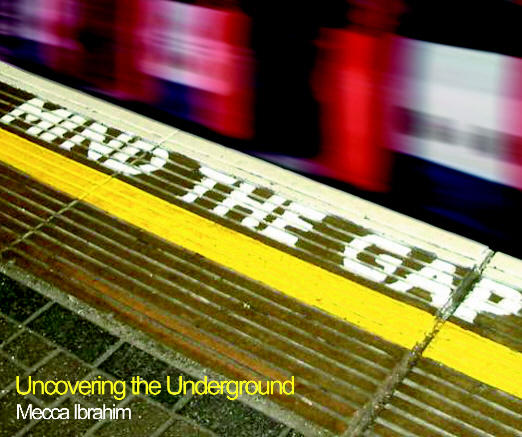
There are signs in Britain (and perhaps other parts of the civilized English-speaking world that I have yet to visit) that read “Mind the Gap.” Once perplexed as to their meaning, I now know that it instructs the reader to be aware of (and stay present to) the gap that exists between the rail car and the station platform where most of these signs are found. They are installed as common courtesies to help keep us conscious so we don’t fall or otherwise injure ourselves when entering or exiting the train.


I am a business consultant who works with individuals and teams in growing businesses to facilitate and catalyze the articulation and execution of their personal and professional ambitions. Like the sign, I help keep people from falling into the gap in their roles, skills, practices and tools that would prevent them from getting from where they are now (their present state) to their desired future (ultimate situation). If successful, they stay conscious and are able to remember what it is that they are trying to produce and the courageous action it will take to get them there.

Instead of looking at the gap as something to be intimidated by and afraid of, the gap should be embraced and well-known by its owner. For without the gap, there would be no ambition to start with, we would already be there. The gap may be (and usually should be) large and audacious; that is how powerful futures and wonderful lives that are worth living are created.

What sort of structure is required to produce the gap and to close it? First, it starts with a story: just what future are you out to produce? Once you have your ambition, there are all of the resources necessary to fulfill on the story. What amount of time, energy and/or money do you need to pull it off? Besides all of the roles, people, skills, practices, and tools we need to construct our futures, we need to take time to reflect on where we are, criteria (metrics) to assess where we are and how we are doing, and to celebrate the small victories along the way to propel us to keep our rigorous action on track over time. More on all of this in future essays…
Oh well, we are now entering California and passing over another set of miracles in Yosemite. I’ll sign off for now and hope that you “Mind the Gap” until we meet again. Go forth and prosper; this is not a dress rehearsal.

Friday, August 12, 2005

The Four Agreements

When looking to change your existing habits of develop new habits, you can start by looking at the agreements that you make and have made with yourself and others. A great book (and website) to consider these agreements has been developed by Don Miguel Ruiz.

Don Miguel asserts that when we are born, we do not have any agreements with the world, but as we grow, we begin to make agreements with others to gain approval and to stay clear of trouble. By adulthood, we have made thousands of agreements that cloud our thinking and impair our judgment for action. He suggests letting them go and adopting a few agreements only will allow us to regain the joy and freedom of our childhood. He has condensed the range of useful agreements to a memorable and workable number: four.

Below is a quick summary of the agreements from his website with each followed some additional thoughts from my practice over the past few years.

1) Be Impeccable With Your Word. Speak with integrity. Say only what you mean. Avoid using your word to speak against yourself or to gossip about others. Use the power of your word only in the direction of truth and love.

What distinguishes us from all of the other animals is our ability to speak, to use language to create the world and to communicate with others.

As leaders, lovers and friends, we use language to coordinate actions with others that we share concerns with (like at work or in our families) and to cooperate with them where we don’t. Language not only makes the world go around, but we create the world that we find ourselves in AND the world we want to create together.

Just imagine how things would be if we all could just follow this first agreement. Gossip newsmagazines and much of talk radio might disappear, but that would not be all bad now, would it?


2) Don’t Take Anything Personally. Nothing others do is because of you. What others say and do is a projection of their own reality (created by their language), their own dream. When you are immune to the opinions and actions of others, you won’t be the victim of needless suffering.

This is a bit harder to adopt than the first agreement, but a little explanation and practice will go a long way here…

Think about the first supporting statement: “Nothing others do is because of you.” Now think about your own actions. You don’t go around trying to make others’ lives miserable or successful; even if we are supportive of others achievements, they usually shine on our own in some way. We simply don’t have enough time working to get what we want accomplished in life, let alone to focus too much on others.

That all said, we and others are just going along trying to get what we want in life. Most times it looks like someone is out to get us, they just happen to want for themselves the same things that we do.

3) Don’t Make Assumptions. Find the courage to ask questions and to express what you really want. Communicate with others as clearly as you can to avoid misunderstandings, sadness and drama. With just this one agreement, you can completely transform your life.

This has been and still is the hardest one for me to follow, but believe me, if I can make progress here, so can you.

This business of assumptions is related to our going around judging everything. Even if we say that we are not judgmental, we most certainly are. We are assessment machines and we roam around making decisions about whether we agree or not, whether this is helpful or not, will this help or hurt us and what we care about. And this process is going on (mostly automatically) all of the time. Similarly, we make assumptions about what people are saying to and doing with us, which leads to misunderstandings (and hard feelings when we take the conversation personally; see agreement number two). This problem is accentuated when we are stressed or under time pressures.

Others are also assuming, judging and/or taking things personally just like we are. We need to be very clear in the requests, promises, and offers of help that we make and other conversations that we participate in. We need to share these agreements with others while also teaching by our own good example.

Next time you observe this happening on either side, stop, take a breath and ask one more clarifying question or offer more information to your colleague.

4) Always Do Your Best. Your best is going to change from moment to moment; it will be different when you are healthy as opposed to sick. Under any circumstance, simply do your best, and you will avoid self-judgment, self-abuse and regret.

This agreement is the glue that holds it all together; without it, the others would just be a recipe for failure and disappointment. We are all human and will always make mistakes. The first three agreements are ideals, very high standards of action for us to live inside of. While we can aspire to uphold them all, we need to have compassion for ourselves and empathy for others when we fail to do so.

When we always do our best, we inspire others to do so also. I would assert that doing our best is the place to start and one agreement that we can always operate under without fail as long as we are aware and remember.

I hope that Don Miguel’s thoughts and ideas about how to de-clutter your emotional and psychological life are as useful for you as they are for me. I have used these agreements as a basis for designing new actions; we can now use the values portion of our ambition development process. Our values form a basis to design new actions for taking care of the concerns that we declared important to us (our ambition) to build a meaningful life.

Sunday, August 07, 2005

Perhaps "eBay's Community Values" can become "Global Community Values"

I learned about eBay’s community values from Alex Benn, who is a Senior Director of Corporate Development there. He was speaking on a CICC panel about corporate M&A at Pillsbury Winthrop late in 2004. After some hunting on the eBay website, I was about to find them and include them below. I am surprised that they are not a more prominent story in the marketplace and that eBay does not do more to promote and reinforce these internally or as part of their image.

eBay’s Community Values
1) We believe people are basically good.
2) We believe everyone has something to contribute.
3) We believe that an honest, open environment can bring out the best in people.
4) We recognize and respect everyone as a unique individual.
5) We encourage you to treat others the way that you want to be treated.

I can really appreciate and respect what eBay is trying to create in their buyer/seller community (even though their corporate culture may not match here). Why not take these values into your office and your home? Let’s explore briefly each of their basic tenets and see where we might want to adjust or add a few thoughts…

First, people are basically good. Not only are people basically good, they also want to help others when they are given the chance. By creating a healthy and supportive environment where you find yourself, you can have these base desires blossom and take root. Such an environment leads to the second pillar of the eBay value system: everyone has something to contribute.

The search for what to contribute to the world is sometimes a lifelong pursuit and for others it seems to have been known from birth. When we support others in finding what their gift(s) to the world might be, we also can find and develop our own. Just imagine what we might be able to create had we been supported and nurtured to find our contributions by others who had found or are finding theirs.

The third premise of an honest, open environment bringing out the best in people does not need explanation or embellishment, but how many or our workplaces and homes are really that way. When people have to hide or defend who they are, there is a stifling of energy that has everyone be less than they are.

The last value on the eBay list is a riff on the New Testament’s “Golden Rule.” It is a wonder that over 2000 years have passed and we can seem to remember what Jesus was trying to tell us. Here, however, I’d like to add Dr. Tony Alessandra’s "Platinum Rule:” Treat others the way they want to be treated. When we do this, we accommodate the needs and feelings of others. We move from being self-centered what we want and need to being focused on the desires of others; I have found that when someone else is the center of my attention, my neuroses seem to melt away and my needs somehow get met in the process.

Thursday, July 14, 2005

In The End, Nothing Matters; Until Then, It All Does

Forward:
You may ask about the title of the book, “Worst Kept Secrets,” as it comes from our collective wisdom. When I was young and into my twenties, I thought that I had many original inventions and concepts. First, I’d be annoyed and upset that someone stole my idea when I saw them in the media or the marketplace. Later, I was inspired when I saw that I had a few that were worth copying or taking to market. After five startups, the last of which had no competition when we started and a dozen when we completed, I realized that original ideas are rare and we are all better off when we share and feed off of each other’s energies. As you will see in the rest of the book, what matters is action, not ideas anyway, so I subscribe to the Marshall Goldsmith rule: “You can’t steal it, because I’m giving it away.”

As for the subtitle: at the end of our lives, we are all dead and buried. Nothing matters at that point because we no longer can do anything about that which survives us. One can take the perspective that since nothing matters when we are gone, what we do with and in our lives also does not matter. Most others take the perspective that since this life is all we can count on (notwithstanding karmic reincarnation or the religious afterlife), we should make the most of it and “be all that we can be” while our hearts keep ticking and brains keep inventing. I am an advocate of the latter concept and that is the reasoning for this book: live the ambition that we invent and enjoy the journey as we create the good life that we imagine. “Life is not a dress rehearsal” applies here as I want everyone I touch to see, feel and savor all that life has to offer them when they are paying attention.

Peter Block once said that he writes his books “to get old ideas out of his head.” While I agree with him and am glad that he does so (being much more that I would have been without some of his best), I have a much more practical reason for writing: I need a structure to help me remember, organize and share my thinking with others in practical and actionable ways. Producing a book keeps my knowledge base “ready-to-hand” and available to me and others that I work with.

The work that follows and the stories included are all personal (mine or related to me by others and used with permission) and not academic or theoretical situations. Much of it was in play into my late thirties, but it was the existential question of what to do with my life as I approached my 41st birthday in 2003 that crystallized my exploration and situation over the next few years. That investigation led to a wider and more applicable issue: How do people (especially men in primary breadwinner positions) in today’s marketplace remain viable not only at 40, but as they hit 50, 60 and beyond?

Tuesday, June 14, 2005

Conundrum

Besides being a great wine, I am not much on conundrums; I like being clear and decisive,
not wondering what my next move is going to be. That said, I am sitting in one now, triggered
by my attendance of my friend, Linda Kennedy's TEC group...

The challenge in working with executives (or in any consultative coaching environment) is to
know when to give answers as a consultant, when to ask questions and speculate in a coaching-style inquiry and when to be an advocate and support the client in their decisions and actions. An even tougher call is how to balance each of them in appropriate measures on the fly.

It doesn't matter whether we are working with clients, colleagues, loved ones or in our community, it comes down to using the right tool at the right time for the right reason. More
on this in a later post...

Sunday, June 12, 2005


Book Recommendations:

Leadership & Self-Deception by the Arbinger Institute. Reads like a novel; distinguishes between when we are "in-the-box" (treating other people like objects) and "out-of-the-box" (when we treat others like the people they are, with hopes, fears, desires and ideas of the future they want...).

Who am I? by Dr. Steven Reiss. The subtitle (The 16 Basic Desires That Motivate Our Actions and Define Our Personality) says it all: we do what we value. I like to use this tool to look to see if our story (our assessment of these basic desires relative to others) matches up with our practices (where we spend our time). Also can help to assess meaningful living (where the actions we take have a strong correlation with the concerns we are).

Do What You Are by Paul & Barbara Tiegerer; subtitled: "Discover the Perfect Career for You Through the Secrets of Personality Type". Uses the Myers-Briggs Type Indicator (MBTI) to decode some dos and don'ts for yor career development.


My friend, Paul LeBoffe gave me one of the best gifts ever: Conscious Business by Fred Kofman. Fred is President of consulting company Axialent. His book on tape is a long lecture on the merits of integrity, mood, conflict and spirit all in the same setting: in our businesses and in our lives. He has produced a framework that I not only can use with my clients, but also adopt and adapt in my own life...

Back in the game!

I realize that I must write a bit each day to really get this going, so here goes...


Discovery of self: I add capacity or expertise to the situations I find mySelf in...
Motto: "Your success is our Ambition…"

My offer:
I am a business consultant that is a technologist (recovering engineer) with good business
sense (entrepreneur-in-hiding) backed up with people development skills (team and executive development)

Help to you? Helping you gain competence (skills) or confidence in that competence.


Let's see where we go with this...

Friday, December 12, 2003

The World Works when the World Works...

I have been amazed over the past two months as I have changed my posture from one of trying to run my own agenda on the world (as if I could) to one of relaxing and blending with the world as it is (my own interpretation of "Integral Consciousness"...). Adding to the experience of less stress, less energy wasted fighting with people, things and situations (which all seem to have their own agendas as well...), and more success in my business, family and life overall, has been my exposure to "Appreciative Inquiry."

My dear friend, Patricia Johnson, has shared with me her work with David Cooperider at Case Western University and Diana Whitney at the Taos Institute. The basic premise (my interpretation) is that focus on the positive: our unique gifts, skills and contributions to the world, rather than the negative: problems, deficiencies and flaws, produces miraculous results... This, combined with my blending with the world, is opening up a new world of exploration and results for me.
Lifelong Learning: What do I need to remember?

I have been curious all of my life, wanting to learn about and discover the world in every way possible. In the past few months, I have taken a different posture, relaxing into my learning and realizing that being a better observer in the world and remembering is much more fun and productive than the pursuit of "facts" and "speeds and feeds" on how the world works...
Professional Ambition: My Offer to the World...

I have been working through an existential conversation with mySelf and others to dilineate my true calling, my "Unique Ability", my path in life... Below is a current cut on it to help me continue this "work of art in progress."

"I work with individuals, management teams and boards of directors in emerging companies on executive leadership and team development issues. My goal is to make a difference in their effectiveness in their roles and as a group within their company. I work with people on their personal ambition and help them blend that with their business goals to have them be more passionate, committed and accountable in their lives. This has the added benefit of reducing stress for them and those around them, while increasing their health and productivity in their lives and in the world."

Myths: Stories we tell ourselves and others

Start a conversation about how we create stories, share them with others and then
have them take on a life of their own (or not...).

Tuesday, November 25, 2003

Anti-Social Software?

Using Tribe, Friendster, LinkedIn and the like help those without networks start and build their own. This usually is built on the back of people who have the skills and have made the investments into create their own social capital. What is in it for the haves to cede some of their competitive advantage to the have nots? When do the haves need to adopt new these technologies in order to stay competitive in a relationship driven world? The real advantage is keeping the social aspect in the relationship where others just want to automate their transaction-driven lives... Big fun (and learning coming...)

Monday, November 24, 2003

Being Human @ Work...

I will do a few posts focusing on the exploration of Richard Heckler's new book, Being Human at Work, in action. Our work has dehumanized us over the years and living inauthentically for such a large part of our lives leaves us dissatisfied, frustrated and regretful. How do we reawaken our authentic, true Selves and act in a consistently genuine fashion in our business lives? I am a stand for lessening or eliminating the gap in congruence in our ambitions (what we say we are and will do) and our everyday experience in the world. Drop me a note if you'd like to ride along...